
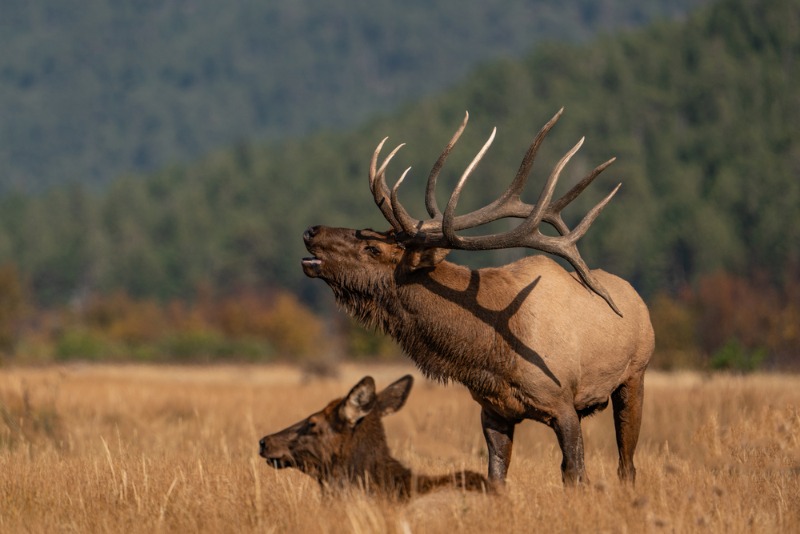
For anyone planning their first elk hunt, there’s more to success than gear and grit. Reading the animals is equally important. At Rocky Mountain Elk Ranch, hunters quickly discover that understanding elk behavior makes the difference between simply being in the field and truly engaging with the hunt. By learning what drives these animals and how they interact with their surroundings, you’ll step into the field with confidence.
Why Elk Behavior is So Important
Elk are unpredictable, but their actions follow patterns that seasoned hunters recognize. Studying elk behavior isn’t just about increasing your odds of a harvest. It’s also about deepening your appreciation for the hunt. When you know why a bull bugles, how cows protect calves, or where elk prefer to bed, you begin to feel connected to the rhythm of the herd. Let’s walk through five crucial ways to understand these animals before your first hunt.
1. Learn the Rut and Bugling Patterns
During the rut (mating season), bulls announce themselves with bugles that echo through the mountains. These calls aren’t random noise; they’re signals of dominance, challenges to rivals, and invitations to cows. By learning to interpret the pitch and urgency of bugles, you can gauge whether a bull is aggressive, curious, or simply maintaining contact with the herd. Practicing with bugle calls before your hunt prepares you to respond effectively and draw elk closer.
2. Study Feeding and Bedding Habits
Elk operate on daily routines that revolve around food and safety. They typically feed in open meadows during dawn and dusk, then retreat to timbered areas or thick cover during midday for bedding. Knowing these patterns allows you to anticipate where elk will move throughout the day. Setting up along travel corridors between feeding and bedding zones is a time-tested strategy for increasing your chances.
3. Recognize Sign in the Field
Elk leave behind plenty of clues for attentive hunters. Tracks, droppings, rubs on trees, and muddy wallows all signal recent activity. The fresh sign tells you elk are nearby, while the older sign suggests you’ve missed the window. Training your eye to distinguish between the two prevents wasted time and keeps you focused on active areas. Reading the land is just as important as glassing the ridges.
4. Pay Attention to Wind and Scent
Few things alert elk faster than an unfamiliar scent. An elk’s sense of smell is keen, and it will often trigger them to travel into the wind to detect danger. Understanding wind direction and practicing scent control are critical for any hunt. Always position yourself with the wind in mind. Approaching from the wrong angle can spook a herd before you even see them.
5. Observe Herd Dynamics
Elk are social animals, and their behavior shifts depending on the season and the makeup of the group. Herd bulls guard their cows aggressively during the rut, while satellite bulls circle the edges, waiting for a chance to slip in. Cows tend to be the most cautious and alert, often detecting danger before bulls. Observing how the herd interacts helps you decide when to move, when to call, and when to stay patient.
Guaranteed Elk Hunting Guides and Outfitters in Idaho
 Learning elk behavior is a key step for any first-time hunter. By studying calls, feeding habits, field signs, wind, and herd dynamics, you’ll enter the hunt with sharper instincts and greater respect for the animals you pursue. At Rocky Mountain Elk Ranch, that knowledge transforms a simple outing into a truly memorable hunting experience. Whether you’re chasing bugling bulls in the fall or quietly watching a herd graze at dawn, understanding the animals ensures your hunt is as rewarding as the harvest.